%2Ffit-in%2F250x250%2Fguide_websites%2F178619%2Fimages%2F1780856469621m.png&w=1920&q=100)
Goliath Grouper Caught in Tampa FL Fishing Charter
Goliath Grouper Fishing in Tampa, FL - What to Expect
%2F%2Fusers%2F662182c5-a0a7-4aaa-aa38-8defcc22c8f1%2Fimages%2Ftampa-goliath-grouper-catch-2867.png&w=1920&q=75)
Fishing Charter by Captain Tom Charlton in June
Meet your Captain Tom Charlton
- Tampa Fishing Charter Adventures with Captain Tom


Summary
Reel in the thrill of a Goliath Grouper fishing charter with Captain Tom Charlton on this Sunday in June. This exciting fishing charter adventure in Tampa, FL showcases the raw power and massive size of one of the ocean's most sought-after trophy species in dynamic Gulf waters.
Fishing Charter with Captain Tom Charlton - Rates & Booking
Captain Tom Charlton of Charlton's Reef Charters delivered an unforgettable experience on Sunday, June 7, landing a massive Goliath Grouper in Tampa's prime fishing grounds. This fishing charter showcases the expertise and proven track record that make Charlton's Reef Charters a top choice for serious anglers targeting trophy species. To book your own Goliath Grouper adventure with Captain Tom, contact Charlton's Reef Charters directly for current rates and availability.
Highlights of This Fishing Charter
This charter delivered exactly what trophy hunters dream about - a battle with one of the ocean's most impressive predators. Goliath Groupers are legendary for their size, strength, and aggressive strikes, and this catch exemplifies why they remain the ultimate goal for experienced anglers. The excitement of fighting this powerful fish in Tampa's nutrient-rich Gulf waters is an adrenaline rush that defines elite fishing experiences.
Captain Tom's local expertise shines through in his ability to locate and successfully target these massive fish. His knowledge of seasonal patterns, reef structures, and grouper behavior puts anglers in position to tangle with genuinely trophy-class fish rather than settling for ordinary catches.
Local Species Insights: Goliath Grouper
The Goliath Grouper stands as one of the most formidable gamefish swimming in Florida's coastal waters. These massive ambush predators can exceed 400 pounds and are known for their explosive power and determination to escape to rocky terrain and deep holes where they can break tackle. In Tampa's reef systems and structural areas, Goliath Groupers hunt aggressively from dawn through mid-morning, making early-start charters ideal for connecting with fish.
Goliath Groupers thrive in complex reef environments and around rocky outcroppings where they can hide and hunt simultaneously. Their preference for structural cover means successful anglers must use heavy tackle and precise boat handling to keep hooked fish away from snags and tangles. The battle with a Goliath Grouper is pure power - these fish don't give an inch without a fight, making every catch a genuine victory.
Tampa's Gulf waters provide ideal conditions for Goliath Grouper fishing, with established reef systems and seasonal abundance that keep these fish active and hungry. The combination of proper tackle, experienced guidance, and local knowledge dramatically increases your odds of connecting with a fish worthy of the effort. Each successful hook-up represents a triumph of preparation meeting opportunity on the water.
Plan Your Goliath Grouper Fishing Day
Success with Goliath Groupers requires commitment and the right setup. Early morning departures are crucial - these fish bite most aggressively in the first few hours of light. Heavy conventional tackle is essential to handle the power and size of these fish and to successfully fight them away from structure. Captain Tom's local knowledge puts your charter in the most productive areas where Goliath Groupers are actively feeding. The experience combines patient waiting with explosive action when strikes occur - a rhythm that defines trophy saltwater fishing at its finest.
Fishing in Tampa, FL: Goliath Grouper
Goliath Grouper Overview
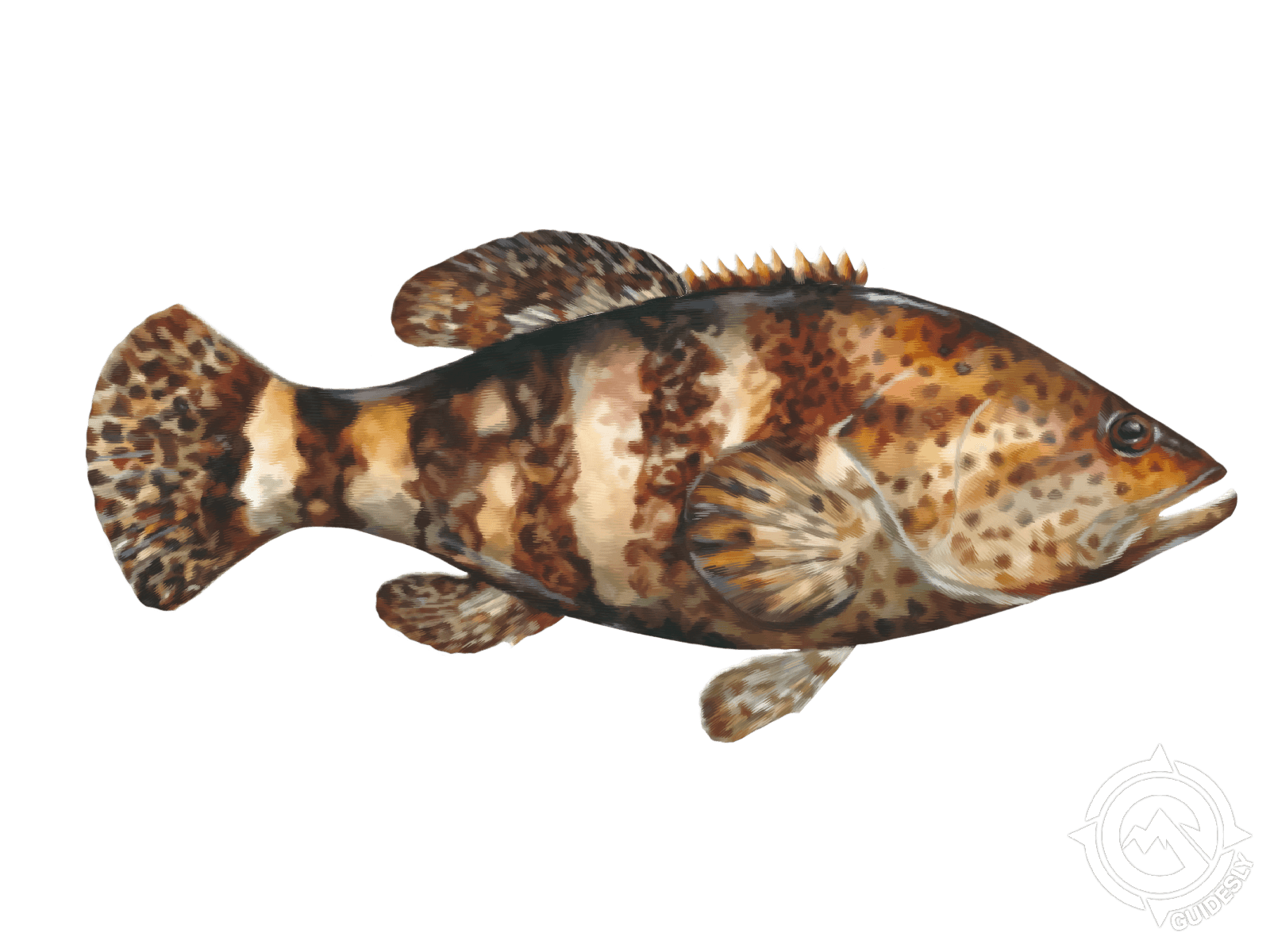
The Goliath Grouper (Epinephelus itajara) represents one of the most impressive gamefish in the family Serranidae, belonging to the order Perciformes. These massive creatures are the largest grouper species found in the western Atlantic, commanding respect from anglers and marine enthusiasts alike. What makes the Goliath Grouper truly exceptional is not just its impressive size—reaching up to 8 feet in length and weighing over 800 pounds—but also its unique ability to thrive in both saltwater and brackish environments. Known for their stocky build, tiny eyes, and broad heads, these fish have earned legendary status among fishing communities, particularly around the Florida Keys and Gulf of Mexico. One fascinating aspect of the Goliath Grouper is their rumored tendency to stalk divers, adding an element of intrigue to encounters with this remarkable species.
Goliath Grouper Habitat and Distribution
Goliath Groupers are found primarily in shallow, tropical waters throughout the western Atlantic, with populations concentrated in the Gulf of Mexico and the Florida Keys. Juveniles begin life in canals, brackish estuaries, and mangrove swamps before transitioning to more open reef environments as they mature. These solitary fish prefer depths around 150 feet or less, navigating among coral reefs, artificial structures, and rock formations. Their range extends from Massachusetts and Maine southward through the Caribbean and into parts of South America, though sightings in northern waters remain occasional. The species' preference for shallow, structured habitats makes them particularly vulnerable to fishing pressure, a factor that has significantly impacted their populations over the past several decades.
Goliath Grouper Size and Weight
Typical Goliath Groupers encountered by anglers range from 50 to 98 inches in length, with weights between 75 and 150 pounds for standard catches. However, this species has the potential to grow considerably larger, with documented specimens exceeding 800 pounds. The world record for a hook-and-line caught Goliath Grouper stands at an impressive 680 pounds, caught off Fernandina Beach, Florida, back in 1961—a testament to the extraordinary proportions these fish can attain. Their massive size, combined with their sluggish nature and slow growth rate, contributes to their vulnerability as a species and underscores the importance of protective regulations.
Goliath Grouper Diet and Behavior
As apex predators in their environment, Goliath Groupers feed on a diverse diet that includes sea turtles, crustaceans (particularly crabs), and slow-moving fish species such as burrfish, catfish, toadfish, and octopus. These fish are fundamentally lazy hunters, preferring to ambush prey rather than actively pursue them. Their solitary nature means they establish limited home ranges and spend much of their time in relative isolation near reef structures and rocky outcroppings. Interestingly, the Goliath Grouper possesses a remarkable ability to change skin color—ranging from dark tan to light grey with mottled patterns—allowing them to blend seamlessly with the ocean floor and reef environment. This color-changing capability, combined with their patient hunting strategy, makes them formidable predators despite their sluggish appearance.
Goliath Grouper Spawning and Seasonal Activity
Adult Goliath Groupers exhibit fascinating reproductive behavior, gathering in spawning groups of varying sizes once they reach maturity. These aggregations occur at specific locations and times that vary by population, with eastern Atlantic populations undertaking yearly migrations to designated spawning areas. During these events, females release eggs that are fertilized by males, after which the eggs rise to the water's surface and drift with ocean currents for 40 to 60 days. Newly hatched juveniles eventually settle in mangrove and seagrass nursery areas, where they remain until reaching sufficient size to venture into deeper reef habitats. A remarkable biological feature is the species' protogynous hermaphroditism—all young groupers are female, but some undergo sex reversal with age, though only a small percentage achieve male maturity, ensuring that most breeding populations consist of egg-laying females.
Goliath Grouper Techniques for Observation or Capture
Heavy-Duty Rod and Reel Setup: To successfully engage with a Goliath Grouper, you'll need specialized equipment capable of withstanding their legendary power. A 50-80 wide reel paired with a very heavy rod provides the foundation, but the real key is using 400 to 600 pound monofilament fishing line—abrasion-resistant line rated at 600 pounds test is ideal. This ensures your line can withstand contact with sharp rocks and reef structures while holding up to the fish's initial bone-jarring strikes. Pair your line with a 20/0 circle hook, large enough to accommodate the massive jaws of this fish. Around the Florida Keys, experienced charter captains recommend this exact configuration as standard equipment for Goliath Grouper encounters.
Strategic Baiting and Anchoring: Live or fresh bait works best—use ladyfish, crevalle jack, or slow-moving species like catfish and burrfish. The technique involves anchoring close enough to a reef structure that the grouper will venture out to investigate your bait, yet far enough away to have a fighting chance of pulling the fish clear before it retreats into structure and breaks you off. A critical tactic is bouncing the bait off the bottom repeatedly to create commotion; Goliath Groupers are not shy and possess no natural predators, making them responsive to disturbances. Their first strike will be violent and immediate—prepare yourself mentally and physically for a powerful yank that could pull an unsecured angler right off the boat.
Location and Depth Strategy: Focus your efforts on shallow-water reefs, wrecks, and artificial structures in depths around 100-150 feet. The Goliath Grouper's preference for structured habitats near the bottom means you should concentrate on areas with significant cover. Early morning trips often prove more productive, as these fish are most active during low-light periods. In the Gulf of Mexico and around the Florida Keys, professional guides typically position boats over known reef systems and ledges where these giants congregate seasonally.
Goliath Grouper Culinary and Utilization Notes
Goliath Grouper flesh is renowned for its exceptional quality, featuring delicate white meat with a mild yet subtly sweet flavor profile. The meat's versatility allows it to absorb virtually any seasoning or cooking technique you apply—whether grilled, baked, fried, or poached. Food enthusiasts describe the taste as distinctive and unlike most other fish species, making it a sought-after culinary experience for adventurous seafood lovers. However, it's critical to note that all harvest of Goliath Groupers is forbidden by law due to the species' severely depleted population and an estimated 80% reduction from historical numbers. While the flesh quality remains excellent, the species' protected status means these fish must be released unharmed, allowing populations to recover. Adhering to catch-and-release protocols is essential for the long-term survival and restoration of this remarkable species.
Goliath Grouper Frequently Asked Questions
Q: What is the best bait for catching a Goliath Grouper?
A: Live or fresh bait works best, with ladyfish, crevalle jack, catfish, and burrfish being highly effective choices. Avoid using artificial lures, as these massive fish rely on live prey and are unlikely to strike synthetic offerings. The key is using substantial, slow-moving baitfish that naturally inhabit their reef environments.
Q: Where can I find Goliath Groupers near the Florida Keys?
A: The Florida Keys and Gulf of Mexico represent prime habitat, particularly around coral reefs, artificial structures, and rock formations in shallow waters. Professional charter services operating out of Key West, Marathon, and Islamorada frequently encounter these fish during dedicated grouper expeditions, especially over known reef systems and ledges.
Q: Is Goliath Grouper good to eat?
A: While Goliath Grouper flesh is considered excellent for culinary purposes—featuring delicate, mild-yet-sweet white meat—harvest is completely prohibited by law. The species is protected due to severe population decline, and all encounters must result in catch-and-release practices to support recovery efforts.
Q: When is the best time to fish for Goliath Grouper?
A: Early morning hours during low-light conditions typically yield the best results. Seasonal variations occur, with spawning aggregations occurring at specific times that vary by population. Spring and early summer often see increased activity as fish prepare for breeding season, though year-round fishing pressure requires year-round regulatory vigilance.
Q: How strong must my fishing equipment be for a Goliath Grouper?
A: Extremely strong. You need a 50-80 wide reel paired with a very heavy rod and 400-600 pound monofilament line (600 pound test is recommended). The first strike is violent enough to pull an unprepared angler overboard, so preparation and heavy-duty gear are non-negotiable for safety and success.
Q: Why are Goliath Groupers protected and no longer harvestable?
A: The species experienced an estimated 80% population reduction due to overfishing, combined with biological factors including slow growth rates, sluggish behavior, and dependence on shallow-water reef structures. This dangerous combination necessitated complete harvest protection by law to allow wild populations to recover and stabilize.